SRH IPL 2026 opener predicted XI: how Ishan Kishan's captaincy, Klaasen's keeper move, and Livingstone's 13 crore slot reshaped Hyderabad's first 2026 XI
A retrospective on the predicted Sunrisers Hyderabad XI published the day before the 28 March 2026 opener against defending champions Royal Challengers Bengaluru. The lineup slotted Ishan Kishan in as interim captain with Pat Cummins unavailable, pushed Heinrich Klaasen back a slot to four and handed him the second-keeper brief under Ishan, and gave the Rs 13 crore Liam Livingstone the six-position in a 6-batter, 5-bowler structure with Zeeshan Ansari as the Impact Player.
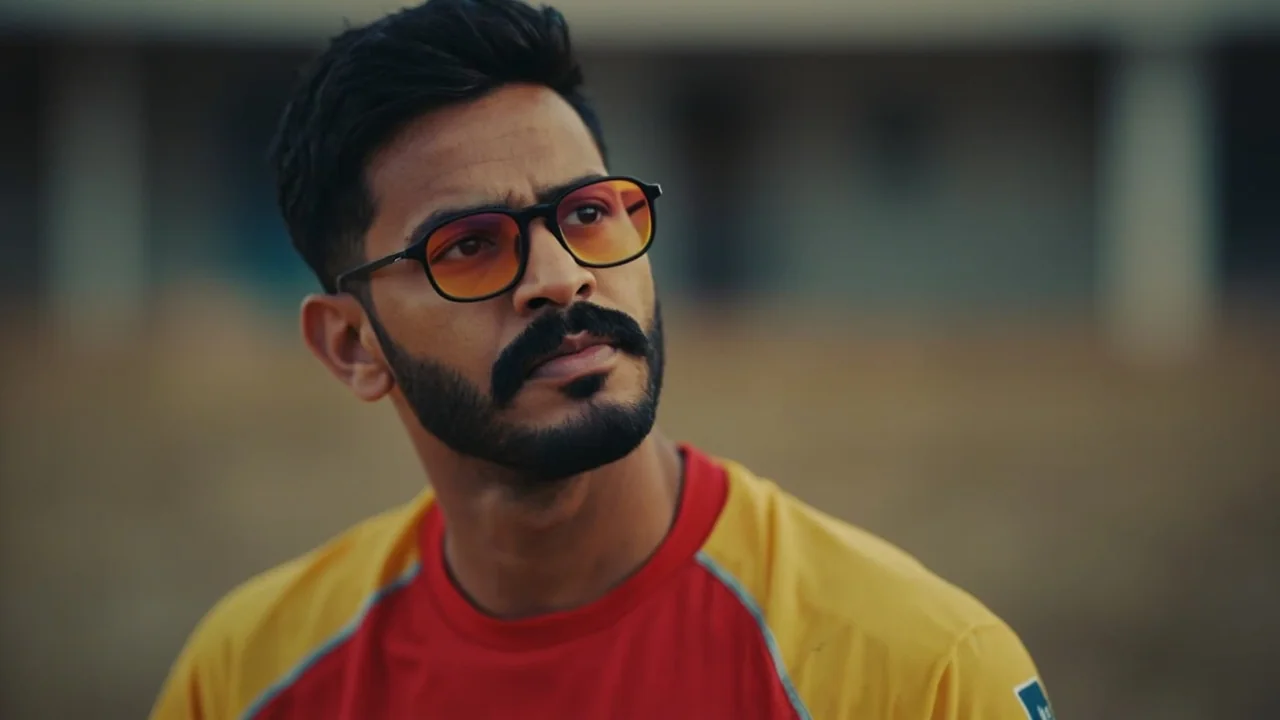
The Hyderabad combination published on 25 March 2026
The 25 March 2026 Yahoo Sports / Willow Sports preview laid out a Sunrisers Hyderabad XI built around four retained batters, two retained seamers, and the auction's biggest buy. The structure was a 6-batter, 5-bowler combination with Zeeshan Ansari listed as the Impact Player.
The XI in batting order read as follows: Travis Head, Abhishek Sharma, Ishan Kishan (capt, wk interim), Heinrich Klaasen, Nitish Kumar Reddy, Liam Livingstone, Kamindu Mendis, Harshal Patel, Eshan Malinga, Jaydev Unadkat, Brydon Carse, with Zeeshan Ansari as the named Impact Player. The preview framed the lineup as the franchise's response to a Cummins-shaped hole at the top of the bowling attack and a Klaasen-shaped move out from behind the stumps.
Travis Head and Abhishek Sharma held the top-order slots that had delivered the 2024 run to the final and the 2025 sixth-place finish. Ishan Kishan moved up from the middle order into the captaincy and the wicket-keeping slot, a role the franchise had tried with Heinrich Klaasen in 2025 and was now handing to Ishan in Cummins' absence. Klaasen dropped a slot to four, where he had batted in his strongest IPL seasons, and took over the second-keeper brief under Ishan's leadership.
Liam Livingstone, signed at the mini-auction for Rs 13 crore, slotted in at six. Livingstone had been part of Royal Challengers Bengaluru's title-winning campaign the previous year, which placed an obvious subplot on the opener: the most expensive new SRH face was a man who had just helped the side Hyderabad was about to face. Nitish Kumar Reddy, the 2024 emerging player, and Kamindu Mendis, retained from the 2024 squad, completed the batting core. Harshal Patel and Eshan Malinga took the two pace-bowling slots alongside Jaydev Unadkat and Brydon Carse.
Pat Cummins was the named captain on the franchise books, the player the side had handed the role in 2024 and the player who had led the team to the 2024 final. The opener against RCB was the first match of a window where he was unavailable, and the preview explicitly named Ishan Kishan as the interim skipper for the opening phase of the season.
The captaincy cell moved up to Ishan Kishan
Pat Cummins' unavailability left the captaincy cell open for the opener. The preview's reading of that cell pointed to Ishan Kishan, whose T20 World Cup 2026 line gave the franchise a form-based answer at the slot above Klaasen.
The T20 World Cup line that landed the slot
Ishan Kishan had scored 317 runs in nine matches at a strike rate of 193.29 at the T20 World Cup 2026, the form line the preview pointed to as the deciding data point. Among the candidates inside the squad, the strike rate was the headline number: at a tournament where scoring tempo separated the semi-finalists from the eliminated sides, Ishan's rate sat above the tournament median and well above the opener's expected tempo.
The captaincy brief was tied to the batting-position brief. Ishan was moved up from the middle order to three so that he could carry the keeper bonus, the captain 2x multiplier, and the left-handed top-order cell on the same face. The preview framed the move as one selection cell absorbing two positional cells, with Klaasen dropping a slot to make room.
For fantasy readers the implication sat at the cell level rather than the captaincy label. Ishan's slot at three carried three scoring layers in one selection: the captain cell, the wicket-keeping cell, and the left-right top-order matchup that Hyderabad's middle order had been built around. The Cummins-shaped captain cell was redrawn around the T20 World Cup form, not the franchise's prior captaincy hierarchy.
How the wicket-keeping brief changed hands
The wicket-keeping brief moved with the captaincy brief. Klaasen had held the role in 2025. Ishan took the gloves for the opener, and Klaasen took over the second-keeper position under Ishan's captaincy.
Heinrich Klaasen had stepped away from international cricket to focus on T20 leagues, which made him available across the IPL calendar but shifted his preparation away from the keeper cell he had held in 2025. The preview read that shift as the precondition for the keeper-cell move: Klaasen available across the schedule, prepared for the role of finisher at four rather than the role of gloveman at the top of the order.
The brief itself sat with Ishan as the primary keeper. Klaasen was named the second keeper for tactical windows, with the second-keeper brief handed over as part of the captaincy package rather than as a separate squad decision. The preview treated the brief as a consequence of the captaincy move, not a standalone selection cell.
The keeper cell, in the preview's reading, was no longer Cummins-shaped. The new cell sat with Ishan at three, with Klaasen as a backup at four. The cell's math is the simplest read of the whole XI: one selection cell absorbed three positional cells (captaincy, batting position above Klaasen, and wicket-keeping), and the new captain was the player the T20 World Cup form pointed to.
The four-seamer structure that absorbed the Cummins-shaped hole
The predicted XI carried four frontline seamers, one wrist-spin option through Zeeshan Ansari in the Impact Player slot, and Livingstone's off-spin as the sixth matchup ball. The structure framed Cummins' unavailability as a fourth-seamer problem rather than a fifth-bowler problem.
How the Cummins-shaped hole was filled
Harshal Patel, Unadkat, Carse and Malinga gave the captain four new-ball and death-overs options without asking any of them to fill the Cummins role of strike bowler. Harshal took the death-overs slot on the strength of his 16-wicket IPL 2025 line and his prior reputation as a death-overs specialist. Unadkat took the powerplay and middle-overs control slot. Carse took the high-tempo pace option. Malinga, the Sri Lankan clearance recipient, took the wrist-and-skid option.
Livingstone's off-spin gave the captain a sixth matchup ball against left-handers, which had been the Cummins role in 2024 and 2025. The preview read the sixth-option brief as the cell that justified the 13-crore outlay on a player who had been a finisher for RCB the previous year.
The structure was Cummins-shaped: four seamers, one wrist option, one part-time option, with the captain free to mix the matchups by phase. The Cummins absence did not force the franchise to redraw the bowling cell, only to redraw the seam-cell leadership.
What Rs 25.50 crore bought, and the late swap on the seam slot
Sunrisers Hyderabad entered the IPL 2026 mini-auction with a purse of Rs 25.50 crore and ten slots to fill. They used nine of them. The headline signing was Liam Livingstone at Rs 13 crore. The biggest adjustment came after the auction closed, when an injury to one of the new seam-bowling buys forced a swap before the squad list was finalised.
Liam Livingstone at Rs 13 crore
SRH's biggest signing of the window and the face of the mini-auction. Livingstone had been part of Royal Challengers Bengaluru's title-winning campaign in 2025. The opener against his former side set the clearest subplot on the predicted XI. The buy answered the finisher cell and the sixth-bowler cell at once.
A late swap on the seam slot
Jack Edwards, signed for Rs 3 crore at the mini-auction, was ruled out injured after the auction closed. The franchise signed the England pacer David Payne for Rs 1.5 crore to fill the seam-bowling slot before the squad list was finalised. The swap kept the squad at the auction-purchased headcount and avoided a middle-window release.
The four other buys that filled the bench
Four more buys sat under the headline. Salil Arora, Shivam Mavi and Sakib Hussain came in as seam-bowling options, and Onkar Tarmale came in as a batting allrounder, signed to cover the slots the 2025 league-stage elimination had exposed. Rounding out the list: Shivang Kumar, Amit Kumar, Praful Hinge and Krains Fuletra.
The nine buys layered onto a 15-player retained core that the franchise had protected through the mega auction. The retained list, with Cummins as captain: Heinrich Klaasen, Travis Head, Abhishek Sharma, Nitish Kumar Reddy, Ishan Kishan, Harshal Patel, Jaydev Unadkat, Brydon Carse, Eshan Malinga, Kamindu Mendis, Zeeshan Ansari, Harsh Dubey, Aniket Verma and R. Smaran. The headcount landed at the IPL cap with the seam-bowling swap absorbed cleanly.
The Livingstone purchase is the cell that drives the projected XI math. A 13-crore overseas allrounder who bowls off-spin and fields in the ring shifts the captain's matchup options: against a left-heavy RCB middle order he gives the captain a sixth bowling option; against a right-heavy attack he offers a switch-hitting counter at six. The matchup case for the opener against the defending champions was the obvious use case the preview pointed to.
Where the predicted XI's form came from
The opener sat two weeks after the T20 World Cup 2026 final. Three of the predicted XI batters were coming off tournament runs that ranged from the headline case to the form-recovery case.
Travis Head had 111 runs in four innings at a tournament that ended in Australia's first-ever group-stage exit. The form line pointed in two directions: a top-order batter whose anchor innings had collapsed in the group stage, and a batter who had finished the tournament with the innings the team needed. The Hyderabad opener was the first fixture after that final.
Abhishek Sharma, the No.1 ranked T20I batter, registered three ducks at the T20 World Cup 2026 before hitting a fifty in the final. The preview read that run as a form line that pointed in two directions: a top-order batter whose anchor innings had collapsed in the group stage, and a batter who had finished the tournament with the innings the team needed. The opener was the first chance to find out which read was right.
Ishan Kishan's T20 World Cup 2026 line of 317 runs in nine matches at a strike rate of 193.29 was the form line that landed him the captaincy. The strike rate was the headline number: at a tournament where scoring tempo separated the semi-finalists from the eliminated sides, Ishan's rate was above the tournament median and well above the opener's expected tempo. The captaincy cell followed the form cell.
Heinrich Klaasen's 2025 line was the form cell that justified the move to four. Klaasen had been the second-keeper the previous season and had stepped away from international cricket to focus on T20 leagues. The 25 March preview framed the keeper-cell reshuffle as a direct consequence of that shift: Klaasen available across the IPL calendar, prepared for the role of finisher rather than the role of gloveman.
Liam Livingstone's form line was the previous IPL campaign. His role in Royal Challengers Bengaluru's title win was the reference point the preview used to justify the 13-crore outlay. Eshan Malinga, retained after a debut IPL season of 13 wickets in seven matches, was the form line the preview used to justify the seam-bowling slot. Harshal Patel had taken 16 wickets in IPL 2025 to finish as the side's joint-highest wicket-taker alongside Cummins after an Rs 8 crore mega-auction signing. Jaydev Unadkat took the experience slot: 110 wickets in 112 IPL matches across 16 seasons.
Aniket Verma, who scored 236 runs in 14 IPL 2025 matches at a strike rate of 166.20, sat outside the predicted opener XI on the preview's reading. The Impact Player slot was held by Zeeshan Ansari. Nitish Kumar Reddy, the 2024 emerging player, took the batting allrounder slot at five.
From the 2024 final to the 2025 sixth place, and what the opener said next
The 28 March 2026 opener was the third fixture in a two-season arc that started with Pat Cummins taking over the captaincy in 2024 and taking the side to the IPL final for the first time in six years, where they lost to Kolkata Knight Riders. In 2025 the side finished sixth and was knocked out in the league stage. The 2026 opener was the first match of the response window.
The 2024 run was a transformation. Cummins had been signed at the 2024 auction as captain and overseas pace bowler, with the franchise framing the move as a reset of the team's middle-overs and death-overs approach. The reset worked for one season: the side reached the final and lost to KKR, but the run reset the franchise's expectations.
The 2025 regression was the cost of the reset. The side finished sixth on the table, was eliminated in the league stage, and went into the 2026 mini-auction with a 25.50-crore purse and ten slots to fill. The retained core of 15 was the same group of names that had been retained ahead of the 2025 season, which means the mini-auction was the place the franchise had to find the answer to the regression.
The 25 March preview read the opener against RCB as the first live test of that answer. Royal Challengers Bengaluru were the defending champions, had beaten SRH in the 2025 league stage, and were opening the season in Hyderabad. The fixture framed the Ishan Kishan captaincy debut against the strongest possible opposition. The first data point of the new-look XI was a data point that came with no warm-up window.
The Cummins absence was the obvious headline. The Ishan appointment was the obvious answer. The Klaasen reshuffle was the obvious consequence. The Livingstone selection was the obvious use of the auction purse. The structure of the predicted XI was a structure the franchise had been building since the 2024 final, with the 2025 regression as the data point the structure was now designed to correct.
Five questions the predicted XI raised, answered against the source
The 25 March preview named every name in the predicted XI and listed the T20 World Cup 2026 form lines that justified each selection. Five questions the predicted XI raised, answered against the source material and against the franchise's 2024 to 2025 arc.
Why was Ishan Kishan named interim captain?
Pat Cummins was unavailable for the season opener. The 25 March preview named Ishan Kishan as the interim captain for SRH's initial matches, with Heinrich Klaasen dropping a slot to four and taking over the wicket-keeping duties under Ishan's leadership. Ishan's T20 World Cup 2026 line of 317 runs in nine matches at a strike rate of 193.29 was the form line the preview pointed to.
What happened to Jack Edwards?
Edwards was signed for Rs 3 crore at the mini-auction and was ruled out injured after the auction closed. The franchise signed the England pacer David Payne for Rs 1.5 crore to fill the seam-bowling slot before the squad list was finalised. The swap was the only material change to the post-auction squad.
Why was Liam Livingstone the headline buy?
Livingstone was signed for Rs 13 crore, the biggest buy of SRH's mini-auction. He had been part of Royal Challengers Bengaluru's title-winning campaign in 2025. The opener against his former side set the clearest subplot on the predicted XI. The preview read Livingstone as the sixth bowling option against left-handers and as the finisher at six.
Where did Eshan Malinga slot in?
Malinga received clearance from Sri Lanka Cricket for IPL 2026 and was retained after a debut season of 13 wickets in seven matches. The preview read him as the wrist-and-skid option in the four-seamer structure. The clearance was the precondition: without it, Malinga would have been unavailable for the opener.
What does the two-season arc tell us about the opener?
SRH reached the IPL 2024 final under Cummins, losing to KKR, and finished sixth in IPL 2025. The 28 March 2026 opener was the first fixture of a response window built around nine auction buys and a retained core of 15. The predicted XI was the structure the franchise had been building since the 2024 final, with the 2025 regression as the data point the structure was now designed to correct.
The opener is the first live data point the franchise gets on whether the 25 March structure works against defending champions in Hyderabad. Royal Challengers Bengaluru were the side that beat SRH in the 2025 league stage and lifted the title that same season; the first fixture of the 2026 campaign was the franchise's hardest possible opener for a side opening without its named captain. The rest of the IPL Fantasy 2026 franchise statistics publishes the same per-team composite for all 10 IPL 2026 sides, with the batting depth and bowling variety scores that frame the predicted XI math.